 EN
EN



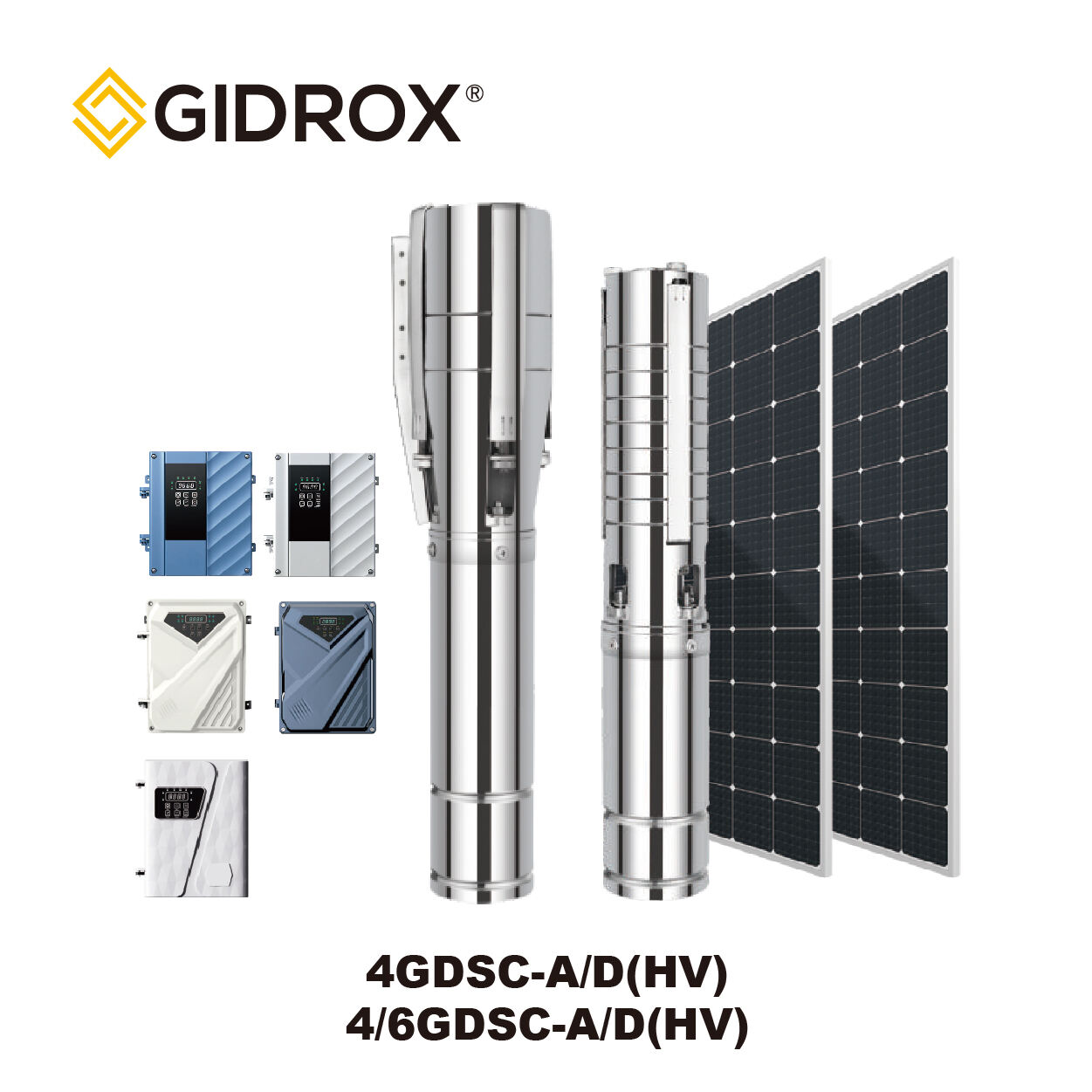
Persistent problem encountered by farmers across the world is the need to find long lasting and cost effective solutions to water pumping that can maintain the operations of the farmers besides making them to grow sustainably. In this regard, solar well pump kits have become a revolutionary technology to provide a reliable alternative to the conventional grid-based or fuel-powered pumps. In the current times, the incorporation of solar pumping systems is not a mere act of environmental friendliness anymore but an important part of a contemporary agricultural best practice of agribusinesses, cooperatives, large scale farms as well. In this paper we look at practical examples of uses and advantage of solar well pumps using real-life projects.
Solar Power is Key For Irrigation
The use of solar well pumps has obvious strategic benefits to agricultural producers. The reduction of the operational expenses is one of the greatest advantages. Switching to solar energy, the farms will be able to save or reduce significantly the expenses of diesel fuel or grid electricity to irrigate their farms. These savings will help to reduce the overall cost of owning the system as it matures with life in the system, that is in addition to the initial investment of setting up the system.
The solar pumps are also energy independent which insulates the farming activities against grid failures and volatile fuel costs. Stable water supply means that there is an adherence to essential irrigation regimes that consequently sustain the health of crops and have stabilizing yields. Environmentally, the implementation of a zero-emission pumping system enforces sustainability profile of a farm -an aspect that is becoming more beneficial in the supply chain of the world.
Comparison of AC and DC Solar Pump Efficiency
In choosing a solar pump system, a choice made is the type of pump to be used (AC or DC). The table below is a comparison that should enable the farmers make a good choice depending on their own needs.
| Feature | AC Solar Pump | DC Solar Pump |
| Power Efficiency | Slightly lower due to inverter conversion | Higher, as it runs directly from DC solar panels |
| System Cost | Higher (requires inverter) | Lower (no inverter needed) |
| Maintenance | More complex with additional components | Simpler, fewer parts |
| Distance from Panels | Can be located further from solar array | Works best close to the panels |
| Best Application | Large farms with existing AC infrastructure | Small to medium-sized, remote installations |
These two types have their own advantages and depending on the conditions of the site, water need and budget, the appropriate choice is possible.
Cost-Savings Breakdown
It is important to know the financial advantages of the solar well pumps. The following diagram shows how a standard solar pumping system can result in significant savings in the long term as opposed to the standard diesel or electric pumps.
Initial Investment: It includes solar panels, pump, controller and installation.
Operating Cost Annually: Fuel or electricity costs are almost zero; low maintenance costs.
Cumulative Savings: Within 2 or 3 years, the savings in diesel/ electric current are usually more than the original investment.
Long-Term Profitability: With a payback period of more than 5 to 10 years, the users will enjoy a virtually free water pumping.
As an illustration, a farm that used to incur costs of 5,000 yearly buying diesel can recuperate the cost of the solar pump system in three years. Subsequently, the latter water pumping costs are not high, i.e., basic system control.
Examples of cases studies: Large-Scale Farm in the Arid Region
A case in point installation was one which entailed a 200 hectare farm in a dry area, which used to rely on diesel-powered pumps to irrigate their farms. Frequent equipment turnover and the increasing fuel prices posed a risk to the crop production and stability of the farm.
Following the site survey conducted by Taizhou Gidrox Technology Co., Ltd., a more specific solar well-pumping system was to be built and installed with high efficiency solar panels and a submersible pump that was specific to the depth and water quantity of the well. This system had been dimensioned to accommodate the daily irrigation needs even when the solar irradiance was low.
During the first year of business, the farm registered:
A 90 percent saving in the cost of diesel.
The continuous irrigation during dry season.
Increased agricultural production because of the availability of water on a regular basis.
Payback period less than three years.
This project underlines the fact that a properly designed solar pumping solution can offer both economic and agronomic advantages.
Implementation Critical Success Factors
An effective installation of a solar well pump must be planned and do so with the technical knowledge. It starts with an intensive site and needs analysis - testing the water source, finding the well depth and yield, calculating the total dynamic head, and estimating the daily volume of water as per the type of crop and the acreage.
Selection of systems and components is also of great importance. The solar panels should be appropriately sized to produce adequate power to the pump during the different weather conditions. Depending on the needs of hydraulic, the type of pump available, which is submersible or surface pump, should be combined with an adequately corresponding controller to ensure the successful operation and safeguarding.
The importance of Engineering consultancy to Success
No universal solar pumping solution exists, every project is to be adapted to the local conditions. Taizhou Gidrox Technology Co., Ltd. assists customers in the provision of engineering intensive consultancy based on the hydrological and solar radiation data to simulate the system performance and predict the water output. This fact-based method enables the clients to know the anticipated payback and makes the proposed system viable and technically feasible.
Conclusion
The opportunity to incorporate solar well pumps into new or existing agricultural projects is a strong value pitch that contributes to the robustness of operations, makes them less expensive, and contribute to the environmental agenda. By adopting an established provider such as Taizhou Gidrox Technology Co., Ltd. farmers and agribusinesses will have an opportunity to adopt systems that are reliable as well as efficient but also geared towards the long-term goal of sustainability and profitability.

 ONLINE